The Rise Of Escapist Skincare


The beauty industry is undergoing a quiet but profound transformation. There has been a shift in consumer behavior from the “lipstick effect”, whereby purchasing lipstick, the ultimate recession-proof product, would become the last remaining indulgence and thus would send lipstick sales booming. The new consumer is into what Mintel calls The Comfort Capital.
While products still promise smoother skin and brighter complexions, their deeper appeal increasingly lies elsewhere: emotional regulation, sensory comfort, and cognitive escape. What we’re witnessing isn’t just a branding shift, it’s a response to measurable changes in stress, attention, and nervous system load. Escapism in beauty isn’t accidental. It’s biological.
Modern consumers operate in a state of near-constant low-grade stress. Research shows that prolonged exposure to uncertainty, digital stimulation, and social pressure elevates cortisol levels and disrupts the body’s ability to return to baseline. When stress becomes chronic, people seek frequent, accessible ways to downshift their nervous systems.
Beauty routines have emerged as one of those tools. Unlike travel, exercise, or meditation, beauty rituals can be daily and controllable, multisensory, private, and self-directed. This makes them uniquely effective for short-term stress modulation, what psychologists often call micro-escapism.
Escapist beauty relies heavily on sensory science. The skin, our largest sensory organ, is densely populated with mechanoreceptors and free nerve endings that communicate directly with the brain. When combined with olfactory and visual cues, topical products can meaningfully influence emotional state.
Olfaction, in particular, plays a central role. Unlike other senses, scent signals bypass the thalamus and connect directly to the limbic system—the brain’s emotional and memory center. This explains why fragrance-forward products can rapidly evoke calm, nostalgia, or comfort.
Textures matter too: viscous, slow-absorbing formulas encourage mindful application; Soft, emollient finishes activate tactile pleasure pathways; Temperature and glide affect perceived comfort and luxury. Together, these inputs shift attention inward, reducing cognitive load and promoting parasympathetic activity.
Neuroscience shows that the brain favors predictability under stress. Repeated routines reduce decision fatigue and create a sense of control, two factors strongly associated with reduced anxiety. Beauty rituals function as structured behavioral loops: Anticipation (opening the product), Sensory engagement (application), and Resolution (perceived comfort or glow). This loop provides cognitive closure, something the modern attention economy rarely offers. Over time, the brain begins to associate specific products or routines with safety and calm, reinforcing repeat use.
Escapist beauty is often mistaken for indulgence, but the neurochemistry tells a more nuanced story. While dopamine is involved, the effect isn’t about overstimulation, it’s about predictable reward. Small, controlled rewards help stabilize motivation systems that are otherwise taxed by constant novelty and comparison (a hallmark of social media environments). Beauty routines offer a low-risk, low-stakes reward that feels earned rather than addictive. In contrast to high-dopamine activities, escapist beauty tends to be slow rather than fast, repetitive rather than novel, and sensory rather than cognitive. This distinction is critical to its calming effect.
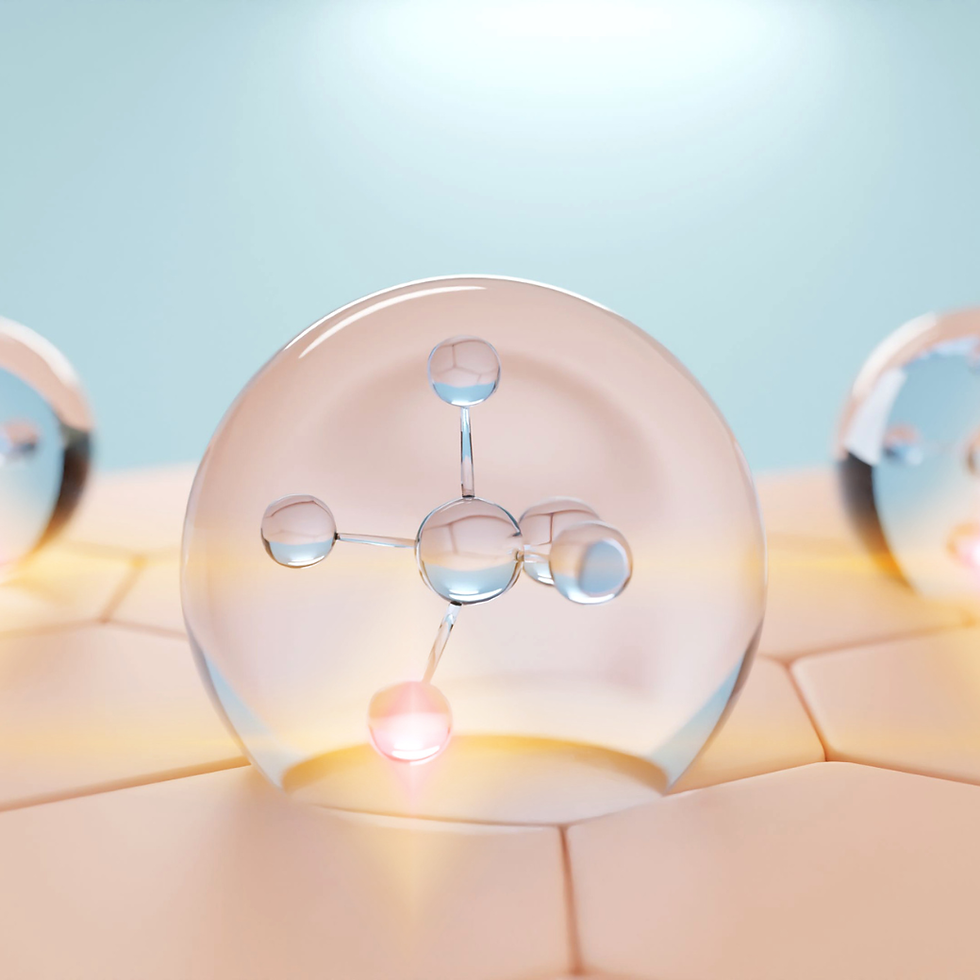
Visual design in escapist beauty isn’t arbitrary. Soft color palettes, rounded shapes, and organic motifs align with what environmental psychology associates with reduced threat perception. Packaging that evokes nostalgia, nature, or fantasy activates emotional schemas linked to safety and familiarity. These cues lower cognitive vigilance before the product is even used, essentially priming the user for relaxation. In this way, packaging becomes part of the functional experience, not just a marketing layer.
Historically, beauty messaging focused on correction: flaws, aging, damage. Escapist beauty reframes the goal toward regulation of mood, stress, and self-perception. This aligns with a broader shift in health science that recognizes emotional well-being as inseparable from physical outcomes. Skin conditions like acne, eczema, and sensitivity are increasingly understood through psychodermatology, which studies the interaction between psychological stress and skin function. Calming the nervous system isn’t cosmetic, it’s physiological. Escapist beauty isn’t a reactionary fad; it’s an adaptive response. As long as stress remains ambient and attention remains fragmented, consumers will gravitate toward products that offer sensory grounding and emotional containment.
The next evolution will likely demand credibility alongside comfort: transparent formulations, evidence-backed ingredients, and restraint in claims. Fantasy alone won’t be enough—but when paired with science, it becomes powerful. At its core, escapist beauty represents a convergence of formulation science, sensory psychology, and emotional health. It transforms personal care from a task into a tool, one that helps people briefly step out of cognitive overload and back into their bodies.
In a world that rarely slows down, beauty has become one of the few industries designing for the nervous system first. And that may be its most meaningful innovation yet.


Comments